
Chinese medicine was built for this. When Western diagnostics reach their limit — chronic fatigue, digestive dysfunction, autoimmune flares, dysautonomia, neurological symptoms that don't fit a clean diagnosis — TCM finds the underlying pattern and treats that. Not the label. The pattern.
Chinese medicine has its own diagnostic system — one that doesn't require lab work or imaging, because we're trained to read the body other ways. Pulse quality, tongue appearance, the texture of your skin, the pattern of your symptoms across time and season, the way heat and cold affect you, how your digestion and sleep and emotions move together — these are the signals we're trained to interpret. We arrive at a diagnosis, just not always one with a Western name. Two people with the same IBS diagnosis might receive entirely different acupuncture protocols and herbal formulas, because their underlying patterns are different. That specificity is where the medicine gets powerful — and it's often most powerful exactly where Western medicine has run out of answers.
What We Treat
The patients who find us are often the ones who've been everywhere else first.
Bloating, cramping, irregular bowel, food sensitivities, nausea. Western medicine often manages symptoms without finding a root cause. In Chinese medicine, digestive disorders are typically patterns of spleen qi deficiency, liver overacting on the stomach, or damp accumulation in the gut. Acupuncture regulates the enteric nervous system and the gut-brain axis; herbal medicine addresses the underlying pattern between sessions. We tend to make quick work of this.
Stomach acid rising is, in Chinese medicine, rebellious qi — the normal downward movement of digestion moving the wrong way. Stress, cold foods, and emotional holding all contribute. We restore the proper direction of digestive flow and address the underlying pattern keeping it dysregulated.
Not tired — emptied. The fatigue that doesn't improve with rest, that has lasted months or years. In Chinese medicine this is typically kidney yang deficiency, spleen qi collapse, or a combination — the body's deep reserves depleted. We have specific patterns for this and specific ways to address them. Herbal medicine is often essential here.
Western medicine manages autoimmune disease primarily through immune suppression. Chinese medicine works differently — identifying the underlying heat, deficiency, or stagnation patterns driving inflammation, and addressing those while supporting overall resilience. We can't cure autoimmune disease, but we can meaningfully reduce flares, fatigue, and pain. We work alongside your specialist.
Dysautonomia — POTS, vasovagal syncope, autonomic dysfunction — involves a nervous system that can't regulate itself properly. Acupuncture has a direct regulatory effect on the autonomic nervous system, calming sympathetic overdrive and supporting parasympathetic tone. In Chinese medicine, this often maps to heart and kidney deficiency with qi failing to hold. We have experience with complex presentations and take these cases seriously.
Neuropathy, brain fog, tremor, post-viral neurological symptoms. Acupuncture modulates nerve signaling and reduces neuroinflammation through pathways Western medicine is still mapping. In Chinese medicine, these often reflect blood deficiency failing to nourish the channels and brain, or wind and phlegm obstructing the clear orifices. Both lenses point toward the same treatment goals.
Blood sugar dysregulation, thyroid conditions, adrenal fatigue patterns. These systems are deeply interconnected — the HPA axis, thyroid, pancreas, and adrenals all influence one another. Chinese medicine sees this as kidney yang, spleen qi, and liver qi working as a unit, and treats them as one. Often dramatically effective where single-system approaches have stalled.
Persistent fatigue, brain fog, breathlessness, chest tightness, and dysautonomia months or years after infection. Post-viral syndromes are not new to Chinese medicine — the pattern of lingering pathogen and depleted righteous qi has been described for centuries. We're seeing real results in this population with acupuncture, herbal medicine, and targeted nutritive support.
The Process
A thorough intake — your full health history, every system, what's been tried before and what helped. For complex conditions, context is everything. We take 90 minutes because we need them.
For most internal medicine conditions, herbal medicine is as important as acupuncture — often more so. Your formula is customized to your pattern and adjusted as it shifts.
Chronic conditions require consistency. Most patients come weekly for the first 8–12 sessions, then taper as the pattern resolves. We set realistic timelines and revisit them honestly.
We communicate with your other providers when useful. The goal is a team, not a replacement. Many of our best outcomes happen alongside — not instead of — conventional medicine.
Investment
Full intake, pattern assessment, and treatment. For complex conditions this first session is doing a lot of important work. The first session is where we understand your picture and set the direction.
Ongoing treatment. Chronic conditions take time — but cumulative progress is real. Most people notice meaningful change within the first 5–6 sessions.
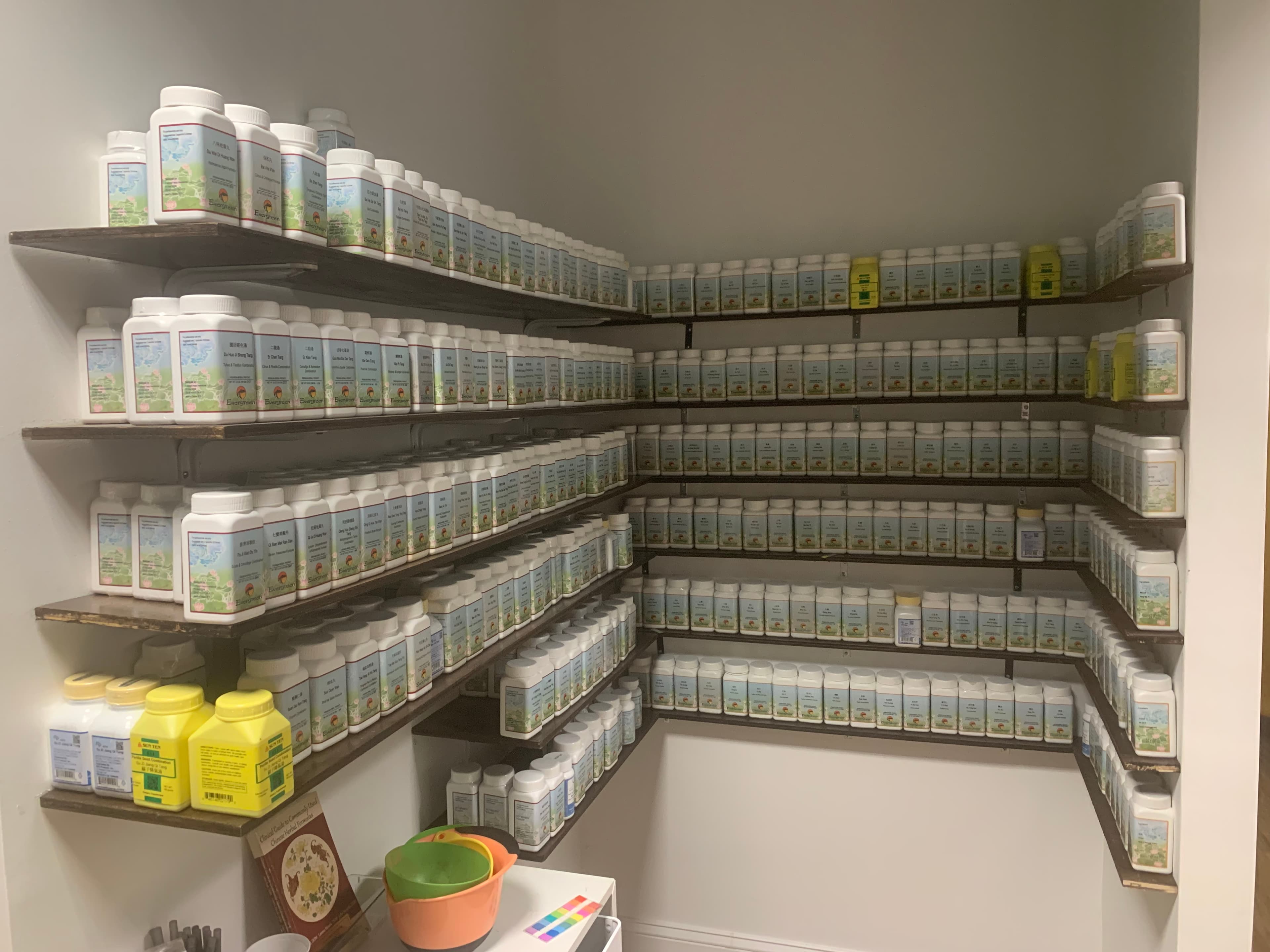
Every formula is mixed in-house, herb by herb, specifically for your pattern. For chronic illness, herbs often do the most important work between sessions.
Packages available · HSA/FSA accepted · Out-of-network · Superbill provided for insurance reimbursement
Common Questions
Yes — and often significantly. Western gastroenterology often identifies functional GI conditions without a clear treatment path. Acupuncture regulates the enteric nervous system — the gut's own nervous system — reduces inflammation, and addresses the stress-digestive connection that drives most of these conditions. In Chinese medicine, we identify whether the pattern is spleen deficiency, liver-stomach disharmony, damp accumulation, or something else, and treat that specifically. Herbal medicine extends the work between sessions.
We can't cure autoimmune disease, and we won't tell you we can. What we can do is identify and treat the underlying patterns driving inflammation — heat, blood stasis, qi and yin deficiency — reduce flare frequency and severity, and address the fatigue and pain that are often the hardest parts to live with. We work alongside your rheumatologist or specialist, not instead of them.
Yes. Dysautonomia — POTS, vasovagal, autonomic dysfunction — involves a nervous system that can't properly self-regulate. Acupuncture has a direct calming effect on sympathetic overdrive and supports parasympathetic tone. Consistent visits help train the nervous system to flow from a more balanced, less reactive baseline.
This is exactly where Chinese medicine often does its most important work. Normal labs don't mean nothing is wrong — they mean Western diagnostics haven't found it. We read the body through pulse, tongue, symptom patterns, and constitutional assessment. We find patterns that don't show up on bloodwork and treat them directly.
Longer than acute conditions. For conditions that have been building for years, plan for 8–12 weekly sessions before we start thinking about tapering — and that's just the foundation. Many patients continue with monthly or seasonal visits to maintain the shift and keep the pattern from returning. Most people notice meaningful improvement within the first 5–6 sessions, and herbal medicine often accelerates that.
We're out-of-network. If you have out-of-network benefits, your insurance may reimburse a portion of your visit cost. We provide a superbill (an itemized receipt) you can submit directly to your insurance. HSA and FSA are also accepted. We can also bill insurance directly for a small fee.
If you're tired of being told your labs are normal, or that there's nothing more to do — come in. We find what the labs don't show. We treat the whole picture.
Book a VisitLearn more about Pulse →