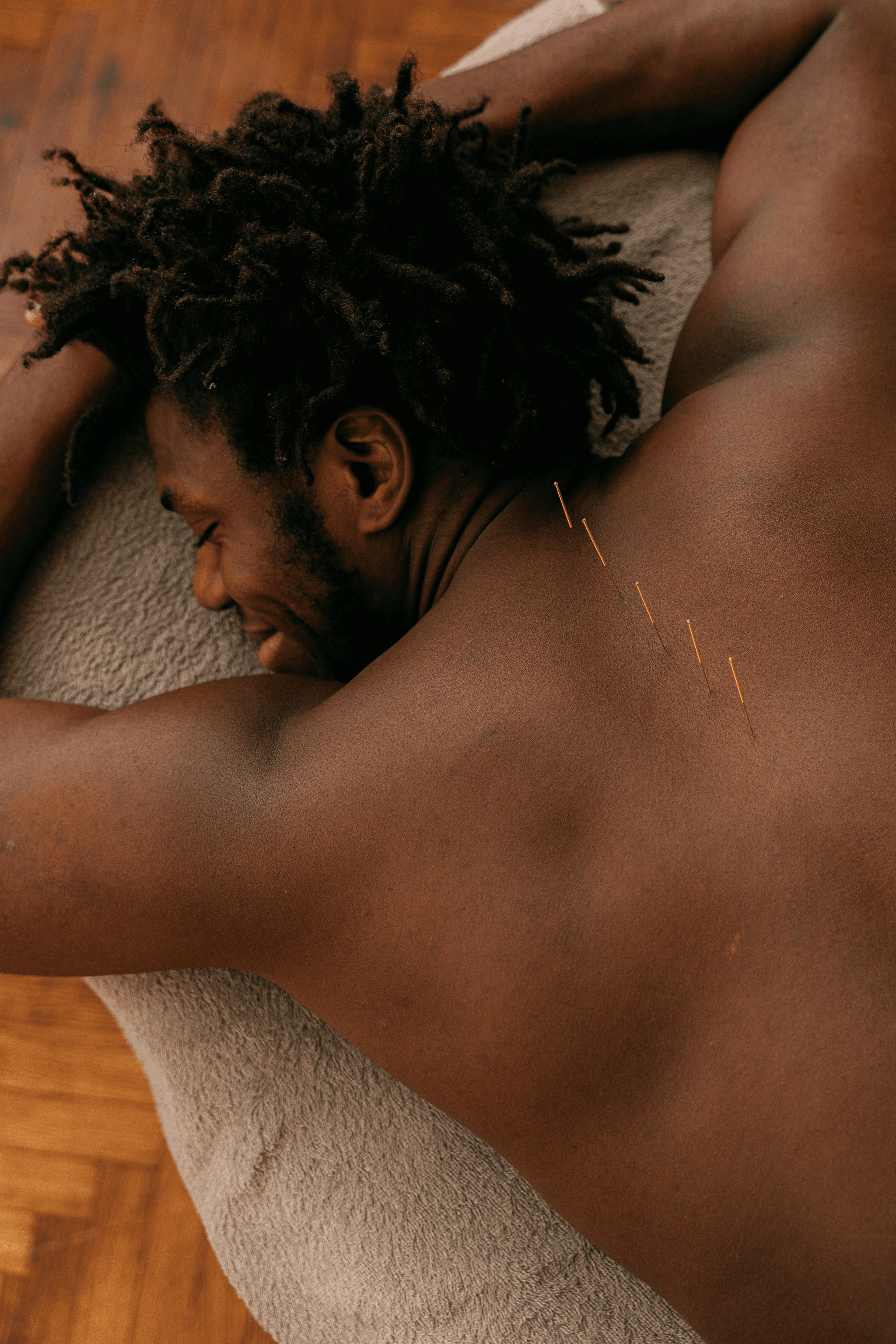
Physical therapy. Injections. Medications that dull the edge but never quite reach the root. Acupuncture works differently — it addresses the nervous system, the musculature, circulation, and the underlying pattern driving the pain, not just the symptom at the surface. And for many of our patients, it works when nothing else has.
What We Treat
Most of the people who find us have already tried the obvious things. In Chinese medicine, pain is understood as obstruction — qi and blood blocked from moving freely through the channels. Where there is free flow, there is no pain. Acupuncture restores that flow, reduces inflammation, resets nerve signaling, and addresses the root pattern driving the pain — not just the location where you feel it. That's why it often works when other approaches have reached their limit.
Tension, cluster, hormonal — if you're managing these with medication and they keep coming back, acupuncture addresses the root pattern. Most people see meaningful reduction in frequency within 4–6 sessions.
Whether it's a disc issue that's been building for years or a muscle strain that won't resolve, we work with the physical structure and the nervous system maintaining the tension.
Arthritis, bursitis, post-surgical recovery — acupuncture reduces inflammation and improves circulation in ways that often surprise people who've tried everything else.
Frozen shoulder, rotator cuff issues, tendinitis — these respond well to acupuncture, especially when PT has plateaued. We often work alongside your physical therapist.
Sciatica, carpal tunnel, peripheral neuropathy — acupuncture modulates the nerve signals that keep pain running even after the original injury has healed.
Widespread pain, exhaustion that doesn't lift, sleep that doesn't restore. This is a complex pattern and we treat it as one — not as a list of separate symptoms.
Menstrual pain, interstitial cystitis, pelvic floor dysfunction, and pain with intercourse — often dismissed or undertreated in conventional medicine. Acupuncture works with the pelvic structures, local circulation, and the nervous system patterns that keep the pain cycle running. We offer dedicated pelvic floor acupuncture with Janaye Volk, L.Ac., who specializes in this work.
Sprains, strains, tears, and overuse injuries — acupuncture speeds recovery and reduces the scar tissue formation that leads to chronic problems later. We work well alongside PT.
Patient Stories
“I couldn’t even stand up straight. I felt so much better after only my 1st session! In the past I’ve tried physical therapy, chiropractor, massage, medicine… I’ve found that acupuncture has been the most helpful with long term pain relief & healing.”
“I had gone to an Orthopedic who recommended steroids and said my other options were an epidural or surgery. I am almost 100% better now with the pain gone. I think I will give this a shot before conventional western medicine for aches and pains going forward.”
“I was a very large skeptic but I have been completely converted. After 4 sessions with Jackie I no longer am having the constant night pain I used to experience. As I mentioned earlier I was a major skeptic but now embrace the practice whole heartedly.”
The Process
A thorough intake focused on your health history, pain patterns, and what makes it better or worse. We learn your whole picture before we treat.
Depending on severity, we typically recommend weekly or twice-weekly sessions initially, tapering as symptoms improve. The gains are cumulative — each session builds on the last.
Cupping, gua sha, electro-acupuncture, or moxibustion added when clinically indicated at no extra charge. We use what your presentation actually calls for.
Acupuncture doesn't just manage pain — it addresses the root patterns. The goal is less dependency on treatment over time, not more.
Investment
Full intake, assessment, and treatment. The first session sets the direction for everything that follows.
Focused treatment building on progress. Many pain patients notice significant shifts by session 3–5.
Specialized care for pelvic pain with Janaye Volk, L.Ac. Follow-up visits are $180.
$65 as a standalone service. Also included at no extra charge during private acupuncture sessions when deemed necessary by your practitioner.
Packages available · HSA/FSA accepted · Out-of-network · Superbill provided for insurance reimbursement
Common Questions
Yes, and the evidence backs it. In Chinese medicine, pain is obstruction — qi and blood unable to move freely through the channels. Acupuncture removes that obstruction and restores flow. Western research confirms this through a different lens: studies show effectiveness for chronic back pain, neck pain, osteoarthritis, and migraines by resetting nerve signaling, improving circulation, and triggering the body's natural pain-relieving compounds. Both explanations are describing the same thing.
Most patients are surprised by how comfortable acupuncture is. The needles are hair-thin — very different from a hypodermic needle. Many patients fall asleep on the table.
It varies — depending on the person, the condition, and how long it's been building. Most people start to notice a real shift by visit 3–5. Our homepage has an interactive guide that shows what a typical care schedule looks like for different situations. One important thing: when you start feeling better, that's not the time to stop — it's the time to taper. Spacing sessions to bi-weekly, then monthly, then seasonally for maintenance is what makes the results last.
Yes. We work alongside your doctor, physical therapist, and other providers.
We're out-of-network. If you have out-of-network benefits, your insurance may reimburse a portion of your visit cost. We provide a superbill (an itemized receipt) you can submit directly to your insurance. HSA and FSA are also accepted. We can also bill insurance directly for a small fee.
Book a visit and let's figure out what your body actually needs.
Book a VisitLearn more about Pulse →